Monte Carlo at Modern Scale
The Monte Carlo method, introduced by Metropolis and Ulam in 1949, estimates properties of complex systems by repeated random sampling. For decades the technique performed well because simulation sizes were bounded — thousands, then millions, of iterations. Today's climate ensembles, risk models, and particle simulations routinely run billions of iterations, distributed across thousands of CPUs, each drawing from its own PRNG instance.
At this scale, the fundamental risk is no longer sampling error. It is that the underlying Pseudo-Random algorithm providing the stochastic variance will eventually repeat. A Mersenne Twister has a period of roughly 219937; most simulations will never reach that. But many modern PRNGs, particularly those used for performance on GPUs, have much shorter periods, and the effective period across a correlated cluster of generators is shorter still.
The Failure Mode: Confirmation Bias by Recurrence
When PRNGs run out of sequences, the Monte Carlo testing folds back on itself, injecting extreme confirmation bias into the results. The simulation begins to re-sample scenarios it has already sampled. Statistical distributions that looked converged are actually resampled peaks from the first half of the run. Tail events — precisely the events the simulation exists to characterize — become systematically underrepresented because they require novel samples, and novel samples stop arriving once the period is reached.

Where the Bias Shows Up
The recurrence bias manifests differently depending on the application:
- Climate ensembles systematically underestimate the tails of extreme-weather distributions, because tail scenarios require novel path sequences that vanish once the PRNG cycles.
- Financial value-at-risk models underreport the probability of multi-sigma market events, producing a false sense of portfolio resilience.
- Particle physics simulations produce artificial periodic structure in their output spectra that mimics real physical signals.
- Engineering reliability models overstate mean-time-between-failure estimates because rare concurrent failure modes are not sampled.
In each case, the simulation reports statistical confidence it does not actually have. The numbers look clean because the PRNG repeats cleanly.
Overthrowing the PRNG
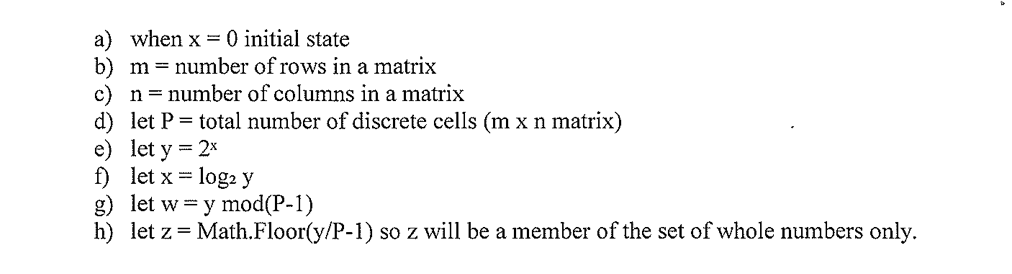
To eliminate this statistical ceiling, the simulation must be fed continuous thermodynamic microstates rather than PRNG output. This is exactly what the m(P+1) and m(P−1) mixing protocols provide — a continuous, non-repeating stream of microstates drawn from an open thermodynamic system.
Because the arrays operate fundamentally within physical space-time variance — Clausius thermodynamics — rather than predictable string math, the random sequence theoretically extends infinitely. There is no period to exhaust. There is no prior state to re-sample. Each iteration receives a genuinely novel microstate drawn from the thermodynamic substrate.
"The P+1 and P−1 protocols ensure the outcomes mapped into your tests accurately simulate non-deterministic reality rather than a limited mathematical loop." — Dr. Thurman Richard White, ATOFIA
Why This Matters for High-Stakes Modeling
The stakes of Monte Carlo accuracy are higher now than they have ever been. Central banks use Monte Carlo to set reserve requirements. Insurers use it to price catastrophic risk. Pharmaceutical researchers use it to model trial outcomes. Weather agencies use it to warn populations of approaching storms. If the underlying entropy is not actually random — if it has merely looked random within the period of the generator — then every one of these decisions is being made on a biased distribution.
Thermodynamic mixing removes the biased distribution. The outputs reflect the physical reality the simulation was designed to approximate, without periodicity artifacts. For the first time in the half-century history of Monte Carlo methods, the stochastic input is a genuinely non-repeating physical process rather than a long-period algorithmic approximation.
Comparison with Quasi-Random Sequences
A reasonable question is whether quasi-random (low-discrepancy) sequences like Sobol or Halton solve this problem. They do not. Quasi-random sequences are designed to cover the sample space evenly, which improves convergence for smooth integrands but does not address periodicity. A Sobol sequence is still a deterministic function with a structure an adversary — or a modeled system — can exploit. Thermodynamic mixing provides both coverage and non-periodicity, because it is a physical process that does not repeat and does not have a structure to exploit in the first place.
The Reproducibility Tradeoff
Simulation practitioners will rightly ask: if the entropy source is a continuous physical process rather than a seeded algorithm, how do we reproduce a specific simulation run for debugging or audit? This is a valid concern, and the answer is that reproducibility is now an explicit recording decision rather than an implicit seeding one. A thermodynamically driven simulation can be made fully reproducible by logging the stream of microstates it consumed; replaying that log reproduces the simulation exactly. What changes is that reproducibility becomes a recorded artifact rather than a derivable property of the algorithm. For audit and regulatory purposes this is often preferable: the log is evidence, whereas a seed is merely a claim.
Implications for Model Risk Management
Financial regulators and model-risk organizations have long been uneasy about the reliance of Monte Carlo models on PRNGs, even when they lacked the vocabulary to articulate the concern. Models that passed back-testing on short histories failed stress tests on long ones, and the failures were disproportionately concentrated at the very tails the models were supposed to characterize. The underlying cause is periodicity: the PRNG ran long enough during the stress test to revisit sequences already sampled, and the tail estimates collapsed toward the recurring region. A thermodynamically anchored simulation has no such regime; tail estimates converge toward their physical rates rather than toward the PRNG's most-visited basin. Risk organizations adopting thermodynamic entropy should expect their tail estimates to increase modestly in the first year as the bias is removed — this is a feature, not a failure.
A Practical Adoption Path
Simulation platforms do not need to be rewritten to benefit from thermodynamic entropy. The entropy source integrates at the same interface the platform already uses for its existing PRNG — typically a kernel device, a library API, or a cluster-level entropy service. Switching the source swaps algorithmic output for thermodynamic output without touching application code. Operators adopting the change should plan for one round of baseline re-characterization — rerunning canonical simulations to establish new reference distributions — after which the improved entropy simply propagates through every consumer downstream.