What Entropy Actually Is
In popular cryptographic discourse, entropy is often described as "randomness" or "disorder." These descriptions are not wrong — they simply describe what entropy looks like from the outside. The mechanical infrastructure that produces the disorder is something more specific: the continuous reconstitution of a system into quantized microstates it has not previously occupied.
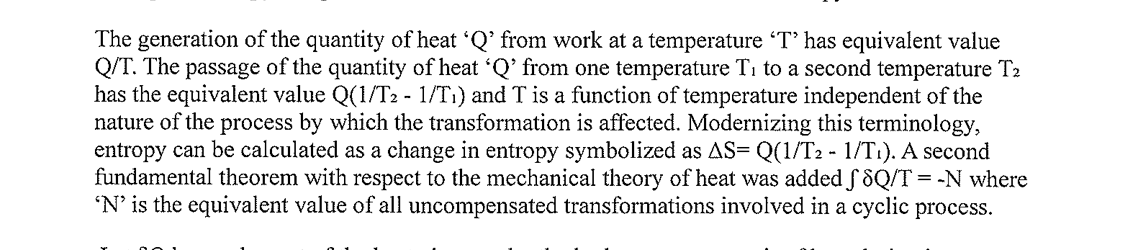
This definition comes directly from Ludwig Boltzmann's 1896 statistical mechanics and Claude Shannon's 1948 information theory. Boltzmann's formulation — S = k log W — counts the number of microstates W consistent with a given macrostate. Shannon's formulation generalizes this to any probability distribution. Both definitions agree that entropy is fundamentally about the number of accessible configurations, not about superficial disorder.

This represents the number of possible energy states that can be randomly filled with physical energy. When the system transitions between states, it produces a reconstituted microstate. When that transition is measured and serialized, it produces cryptographic entropy — real entropy, not algorithmic appearance of entropy.
Beyond Algorithmic Shuffle
Algorithms shuffle. A PRNG takes a state and permutes it; a hash takes an input and maps it; a cipher takes a plaintext and transforms it. All of these operations rearrange existing bits into new positions. None of them create new bits.
Thermodynamic reconstitution is categorically different. The physical system does not rearrange existing microstates; it creates new ones by absorbing and releasing energy from its environment. The analogy in the whitepaper is instructive: an algorithm shuffles a deck of cards predictably, always producing a permutation of the same 52 cards. Thermodynamic reconstitution physically burns the deck and creates an entirely unique combination of cards from the ashes — cards that did not exist before the reconstitution occurred.
Why This Distinction Matters Cryptographically
The cryptographic consequences of this distinction are substantial:
- No prior-state leakage. Because new microstates are created rather than permuted from old ones, observing the system's history gives no information about its future.
- No structural signature. A shuffle always preserves the structural properties of the input deck (e.g. always 52 cards, always four suits). A reconstitution has no such invariants to fingerprint.
- No period. A shuffle has a finite group of possible permutations and must eventually repeat. A reconstitution is drawing from an open thermodynamic reservoir; the state space is not enumerable.
- No seed dependency. A shuffle requires a seed to select a starting permutation. A reconstitution does not; the starting state is whatever the physical substrate happens to be in at the moment of observation.
"The randomness produced during mixing creates new and different micro-state ensembles for evolutionary staging. This reconstitution is a course of action for a system to discover mutual relationships as well as mutually exclusive relationships." — ATOFIA Whitepaper
Boltzmann, Shannon, and the ATOFIA Formulation
ATOFIA's formulation combines Clausius' macroscopic thermodynamics, Boltzmann's statistical mechanics, Gibbs' ensemble theory, and Shannon's information theory into a single cryptographic primitive. Each of these frameworks was developed to describe the same underlying reality from a different angle; ATOFIA's contribution is to recognize that the same reality can be sampled — not just described — for cryptographic purposes.
The result is what the whitepaper calls a TRNG (True Random Number Generator) anchor. Unlike conventional TRNG designs, which measure a single physical phenomenon and condition the result algorithmically, the ATOFIA anchor samples reconstitution events directly. The output is not raw physical noise shaped into cryptographic form; it is cryptographic form, emerging from reconstitution events.
Implications for Evolutionary Cryptography
The whitepaper's phrase "evolutionary staging" is deliberate. Biological evolution is the best-documented example of an open thermodynamic system producing novel microstates continuously for four billion years without repetition. DNA does not shuffle; it reconstitutes. Mutations introduce genuinely new information; recombination mixes that new information across generations. The mathematics of evolutionary microstate generation and the mathematics of ATOFIA's mixing protocols are the same mathematics.
This equivalence suggests a broader design principle: cryptographic systems that need to survive indefinitely should be built on the same physical primitives that biological systems have used to survive indefinitely. Algorithms, by contrast, are closed systems — the biological analogy is a species with no mutation, no recombination, and a fixed gene pool. Such species do not survive. Such algorithms will not either.
Measuring Reconstitution in Practice
A natural question from engineering audiences is how reconstitution is measured once it has occurred. The answer lies in the microstate's relationship to the mixing region's boundary conditions. A reconstituted microstate arrives at the measurement interface with a specific configuration of physical degrees of freedom — energy, position, momentum, spin — and the hardware serializes that configuration into a digital word. There is no conditioning algorithm between the reconstitution event and the digital output; the measurement is the output.
This direct-measurement architecture has a concrete engineering consequence: the quality of the entropy stream depends on the quality of the measurement apparatus, not on the quality of any software post-processing. Traditional TRNG designs hide measurement weaknesses behind algorithmic whitening, which is secure only as long as no one finds a reduction through the whitening step. ATOFIA's design exposes the measurement directly, which forces the hardware to be honest about its own quality — a property that audit and regulatory bodies generally prefer.
Why Reconstitution Is the Correct Frame for Cryptography
The vocabulary of cryptography has historically been mathematical — permutations, group actions, commutative diagrams. This vocabulary has served the field well for decades, but it has also obscured the physical reality underneath every real deployment. Every cryptographic system runs on physical hardware, and every physical hardware is ultimately a thermodynamic system. The reconstitution frame brings this reality forward, making the thermodynamics explicit rather than implicit. Operators evaluating cryptographic systems should ask not only "what mathematical problem does this reduce to?" but also "what physical process is this sampling, and how is it being sampled?" A system whose answer to the second question is "no physical process; it's purely algorithmic" has given the game away: it is relying entirely on a formal system's internal claims, with all the Gödelian limitations that entails.