Why HFT Cryptography Is Uniquely Exposed
HFT operates inside a window that the rest of the financial system never sees. Order placement, cancellation, and execution happen in absolute milliseconds, with cryptographic envelopes generated and verified on the same time scale. Conventional CSPRNGs are too slow at the head of the pipeline, so most colocated systems fall back to lightweight deterministic generators that prioritize throughput over unpredictability.
Because PRNGs use optimized, highly predictable mathematical sequences to operate at these speeds, well-funded syndicates deploy machine-learning inference models to evaluate trading packets and front-run the deterministic PRNG patterns. The arms race is not at the algorithm layer — it is at the entropy layer.
Absolute Chaos at HFT Speed
To survive, HFT cryptography must abandon mathematically verifiable randomness in favor of absolute physical variance. ATOFIA's m(P+1) and m(P−1) Continuous Entropy Mixing Protocols are designed for exactly this duty cycle.
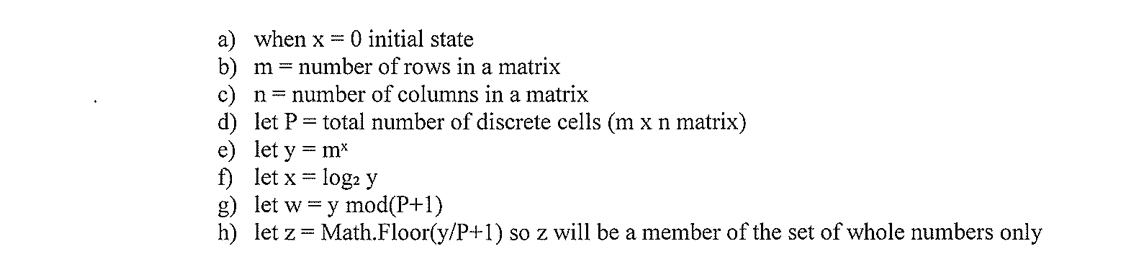
This specific subset of topological entropy runs as a strict single helix, requiring no array splitting at sample time. As a result, it generates uncompensated thermodynamic permutations instantly, meeting the rigorous nanosecond parameters of HFT pipelines without falling victim to deterministic tracking.
What the Pipeline Looks Like
- Anchor inside the colocated cage. The microstate is sampled where the order envelope is sealed.
- No central entropy server. Each pipeline draws from its own physical anchor; there is no shared seed for an adversary to model.
- Verification stays standard. Receiving venues do not need to change their handshake; only the source of randomness changes.
The Adversarial Equilibrium
The inference-model front-running playbook depends on the existence of a model. Continuous thermodynamic mixing produces output that is not the image of any function the adversary can train against. The equilibrium shifts: the only meaningful HFT randomness is the randomness the adversary cannot fit a model to.